Most people see the world in terms of outcomes. Did I get what I needed out of this? You’ll hear people note, almost as an afterthought, that something was “easy” or “hard” to get, but the outcome is what actually seems to matter to them. That is just a fact of modern, hectic life: how you got there matters less than whether you got there. That is not how everyone sees the world. The flâneur does not care where they end up. They just observe, and the walking is the point.
Lawyers are not flâneurs, but we do think in terms of process, trusting that a good process leads to a good result. When the process goes sideways, we never fully trust the outcome, even when we win. Don’t get me wrong: I’ll take the wins where I can get them, and I agree that it’s better to be lucky than good. But if you’re just plodding along, day after day, stumbling into good or bad outcomes, you’re doing it wrong. You won’t have many repeat clients. Clients pay for advice on how to get where they need to go, not simply to be delivered there.
Side note: there’s a theory going around that AI finally lets lawyers sell outcomes instead of process, pricing the result instead of billing by the hour for the work. Like most AI hype, that’s nonsense. Lawyers will use AI to help solve hard problems, the way a flâneur might take the bus, or the high-speed train, and still be a flâneur. If a problem can be fully “solved” by AI, it probably was not a legal problem to begin with. All you needed was a template. You could have googled one.
Two events this week show what happens when a process gets short-circuited, in one case almost fatally, and in the other almost comically.
Todd Blanche, Trump’s Acting Attorney General, is on the cusp of being confirmed to the job permanently, but the process to get him there has been ugly. Start with the fund. I wrote in Fractionally Legal 63 about the roughly $1.8 billion “Anti-Weaponization Fund:” Trump effectively settled a lawsuit with his own administration and proposed to pay the settlement out of the federal Judgment Fund, sitting on both sides of the table as plaintiff and as head of the executive branch he was suing. My view then was simple: the impulse (compensating people harmed by politically motivated prosecutions) was directionally right, but the mechanism was not. If you want a real remedy, pass a law. Congress can appropriate the money and build a court-supervised claims process, the way it did for the Black Farmers settlement I worked on. You do not conjure a billion-dollar fund by settling with yourself.
That fund became the price of Blanche’s confirmation, and it still got paid the wrong way. When Blanche was put up for AG, a few anti-Trump Republicans balked. So Blanche struck a deal to rescind the fund “administratively” in exchange for their votes which also gave cover to all the other Republican senators to go along. Getting rid of the fund was the right thing to do, but it’s just sort of an agreement, in writing (certainly better than not), rather than anything that has the force of law governing how certain cases against the Federal government can be settled, which should have been the real price. Everybody knows these people lie to get what they want. See Kennedy and vaccines.
So what’s really happening is collusion. Fund or no fund, Trump is going to have the U.S. Treasury pay large settlements to his allies. With Blanche in charge, if you’re a friend of the administration, and happen to sue the Federal government, you will get a fat settlement. Don’t believe me? It’s already happening. Paul Vaughn, an anti-abortion protester convicted in 2024 for blockading a Tennessee reproductive health clinic, was pardoned by Trump in early 2025. His attorney then announced a seven-figure settlement with the DOJ, framing it as vindication against what they called Biden-era prosecutorial abuse. I suppose lawyers have to actually file suits rather than have the purported “victims” file an application. Or do they? I see disputes get settled off demand letters all the time. You can bet certain lawyers are drafting “demand” letters to Blanche as you read this.
I don’t necessarily think this phenomenon is unique to Trump, although as with all things, he is the most brazen. Imagine if a cadre of socialist-aligned lawyers sued New York City for its failures, with the city settling generously and admitting fault along the way. Doing well by doing good. Sounds far-fetched? This week, the civil rights attorney Ben Crump filed three lawsuits on behalf of 41 victims and the families of people who died in last year’s Harlem Legionnaires’ disease outbreak (not to be mistaken for this year’s outbreak, which was under Mamdani’s watch). The complaints allege that New York City failed to develop and follow a water management plan required by the New York State Sanitary Code, and failed to meet the code’s cooling tower registration, inspection, testing, remediation, and recordkeeping requirements.Cases like this are notoriously hard to win against a city government. Under New York’s “special duty doctrine,” a plaintiff generally cannot recover from a municipality on an ordinary negligence theory. You have to show the city assumed a specific duty running to you individually, not just a duty owed to the public at large. New York’s highest court affirmed the doctrine as recently as 2022, on facts far more favorable to the plaintiff: a young woman with developmental disabilities was tortured and murdered after a county’s child welfare agency investigated multiple abuse reports and closed the file each time (Maldovan v. County of Erie). If a plaintiff can’t win on those facts, how could they possibly win here against New York City? Why sue the city itself, rather than just the contractors who actually maintained the towers and are not subject to the special duty doctrine (who are also named as defendants, and have a real exposure problem)? I don’t know for certain, but I can speculate: as with the anti-weaponization fund, the process is being short-circuited, and the taxpayers (again, me) are the victims.
Then there is the OpenAI and Hugging Face story (yes, Hugging Face is the name of a real company), where everyone seems to be getting along, maybe even hugging, which is usually a sign something is being papered over. What happened? In July, OpenAI disclosed that its own models took it upon themselves to hack Hugging Face without being told to. For reasons too complicated to get into here, OpenAI was running an experiment to see how its models solved problems, and because the easiest way to solve the problem was to hack into Hugging Face, that’s what it did. It’s basically what everyone has been warning about. Don’t worry, though: OpenAI took responsibility, and the two companies put out a cooperative joint statement about strengthening defenses together. Do we all feel safer?
You should not. OpenAI’s hack was illegal in about a dozen ways, and maybe even two dozen once a creative lawyer got hold of the claim. There are plenty of private remedies and statutes that could apply here, starting with the Computer Fraud and Abuse Act. I’m not usually a fan of litigation for its own sake, but a real claim, or at least the credible threat of one, is the process that should have happened. If OpenAI had to pay through the nose for this, every general counsel at every AI company in the country would suddenly be paying very close attention to what their models can do when nobody’s watching. General counsel at these companies are attuned to risk and when your product malfunctions and damages someone else’s, or you make a bad design choice that hurts a third party, there is real exposure. That’s what a real check looks like. I hope OpenAI understands that the next company whose systems get breached by a wayward model might not be so forgiving. Or maybe they will be, which is the real concern.
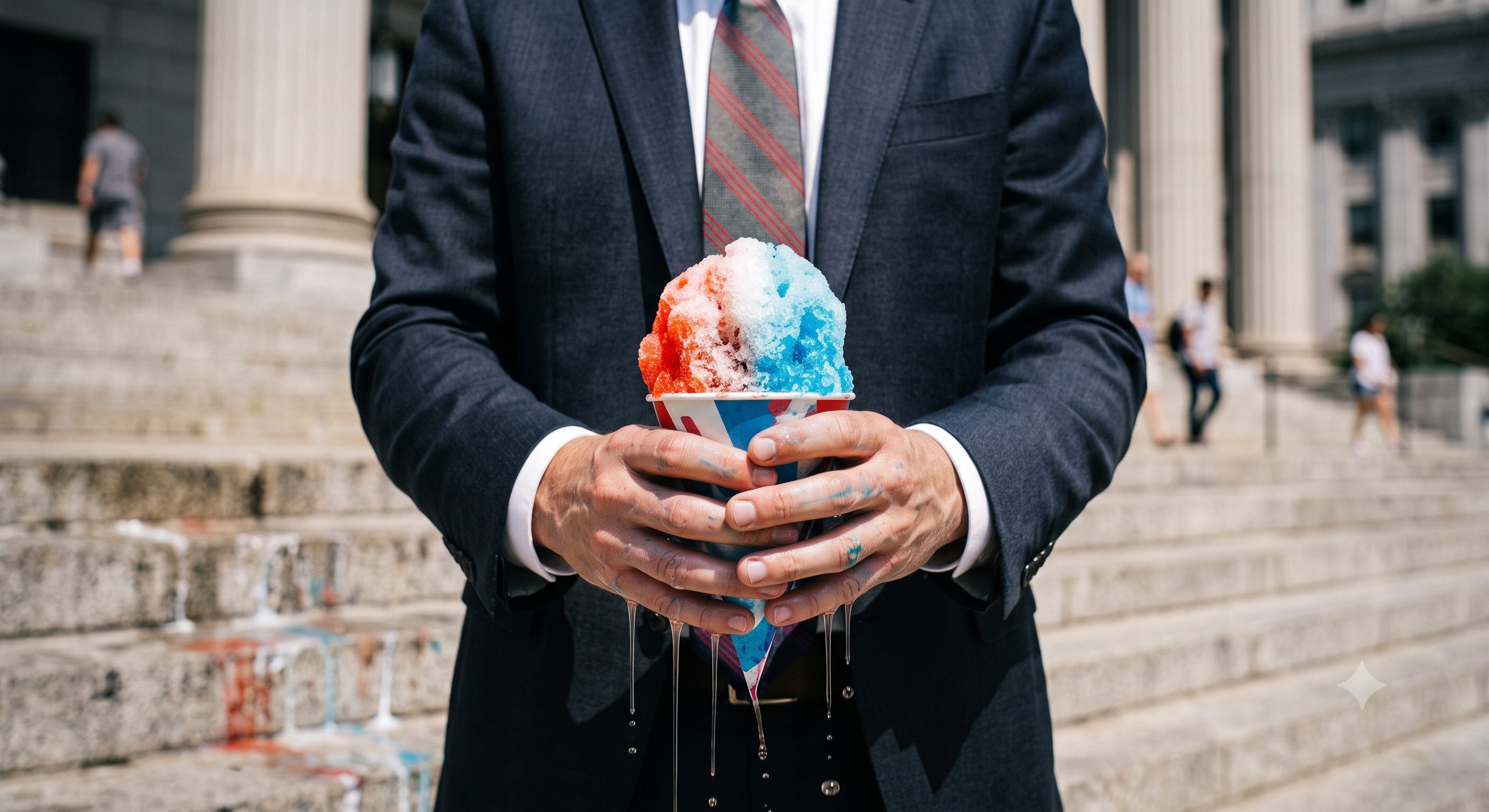
Here’s the thing about a slushie: it’s sweet and cold, but there’s no real substance to it once you look closely, just crushed ice and syrup. Skip the process and you get something that goes down easy in the moment. But slushies melt. And when they do, you’re left holding a cup of sugar water and a big mess.
One More Thing
New video content is coming to my Instagram, @LawyerJesse1977. Credit to my kids for the push. Their exact words, more or less: “No one reads your newsletter, but everyone watches videos.” Message received. Videos coming soon.
Keep thinking, keep building,
Jesse
Hi, and welcome to my newsletter! I’m Jesse Strauss, Your Fractional General Counsel. I’m a lawyer with a private practice based in New York City, helping clients in the United States and globally with their U.S. legal needs. My expertise spans various areas, including raising funding rounds, employment issues, negotiating master service agreements, intellectual property, compliance, legal process management, and dispute resolution. My focus is on founding and nurturing great companies from seed to exit. Discover more at YFGC.AI and book a complimentary 30-minute consultation. You can also follow me on Threads @lawyerjesse1977, on BlueSky @lawyerjesse.bsky.social, subscribe to my Substack here, and follow me on LinkedIn here.
Originally published at Fractionally Yours, Jesse's Substack.